DIY Video Lighting: 3 Zero-Cost Hacks to Instantly Upgrade Your Videos
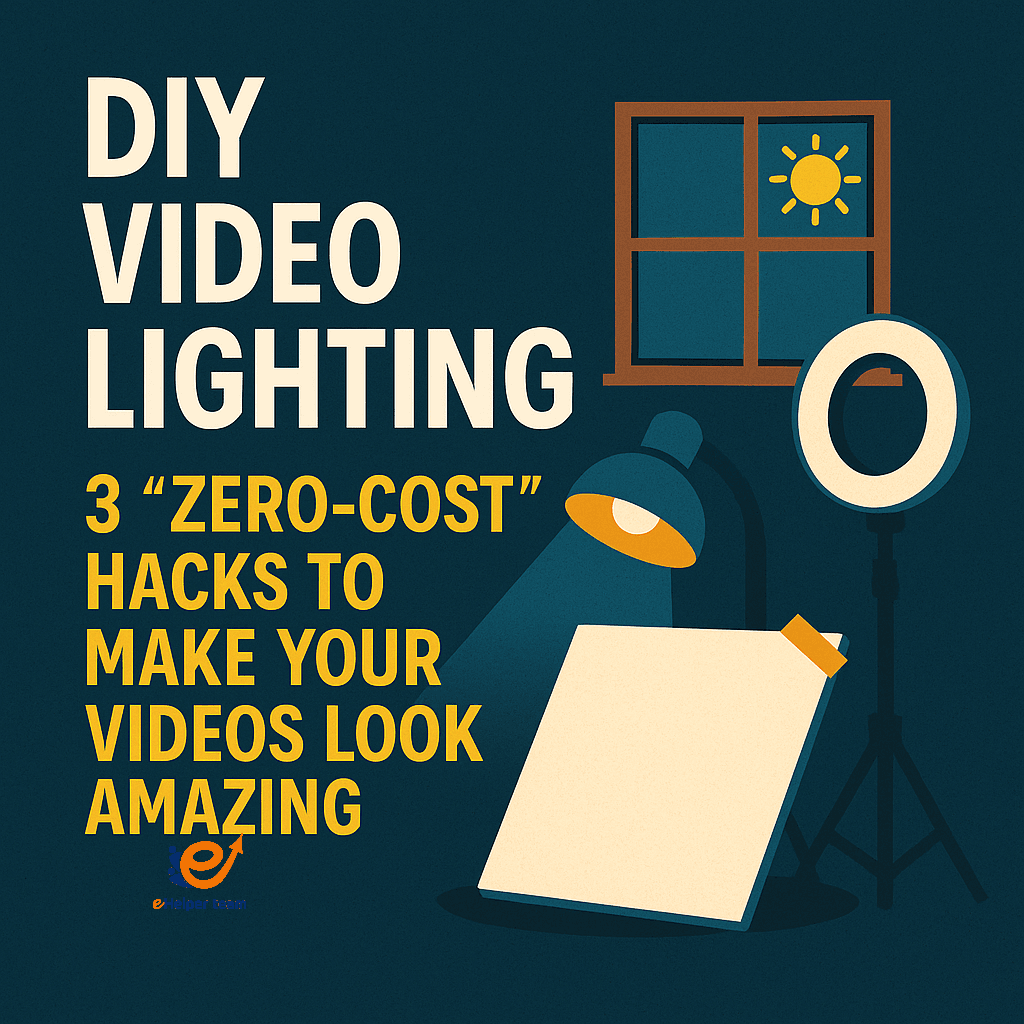
Have you ever wondered why some videos look so professional even when filmed at home? The secret often lies in clever lighting techniques. Many believe you need expensive gear to achieve cinematic results, but the truth is, with the right diy video lighting approach, you can transform your setup for free.
Think about your favorite creators. Their videos likely have balanced brightness, soft shadows, and flattering tones. These effects don’t always come from costly equipment. Instead, they rely on creativity, resourcefulness, and a few smart tricks. Whether you’re filming tutorials, interviews, or social media content, mastering budget-friendly lighting will instantly elevate your visuals.
So, what if you could achieve studio-level quality without spending a single penny? In this guide, we’ll explore three zero-cost hacks to help you light your videos like a pro. You’ll also learn how to use natural resources, basic household items, and free tools to create engaging and high-quality visuals that capture your audience’s attention.


Why Good Lighting Matters in Video Production
Lighting shapes the mood, tone, and clarity of your video. Even the best camera can’t compensate for poorly lit scenes. Well-lit footage improves visibility, enhances colors, and makes you appear more professional.
Benefits of mastering lighting:
Increases audience engagement
Builds credibility and trust
Improves video clarity and sharpness
Reduces editing time
Hack 1: Using Natural Window Light to Your Advantage
Natural light is one of the most flattering sources available, and it’s completely free. The key is learning how to control and position yourself relative to the light source.
Steps to optimize natural window light:
Film during the “golden hours” — early morning or late afternoon for softer tones.
Position yourself facing the window for even lighting on your face.
Use sheer curtains to diffuse harsh sunlight and avoid overexposure.
Pro tip: Combine natural light with reflective surfaces like mirrors or white walls to bounce light back onto your subject for a balanced look.
Hack 2: Three-Point Lighting Setup Explained with Household Items
The classic three-point lighting setup — key light, fill light, and backlight — doesn’t require professional lights. You can replicate it using desk lamps, table lights, or even LED flashlights.
Basic arrangement:
Key Light: Your brightest source, placed at a 45° angle to your face.
Fill Light: A softer light on the opposite side to reduce shadows.
Backlight: Positioned behind you to create separation from the background.
You can create diffusers using parchment paper or white fabric to soften the light, preventing harsh shadows.
Hack 3: Bouncing Light with Foam Board for Soft, Even Illumination
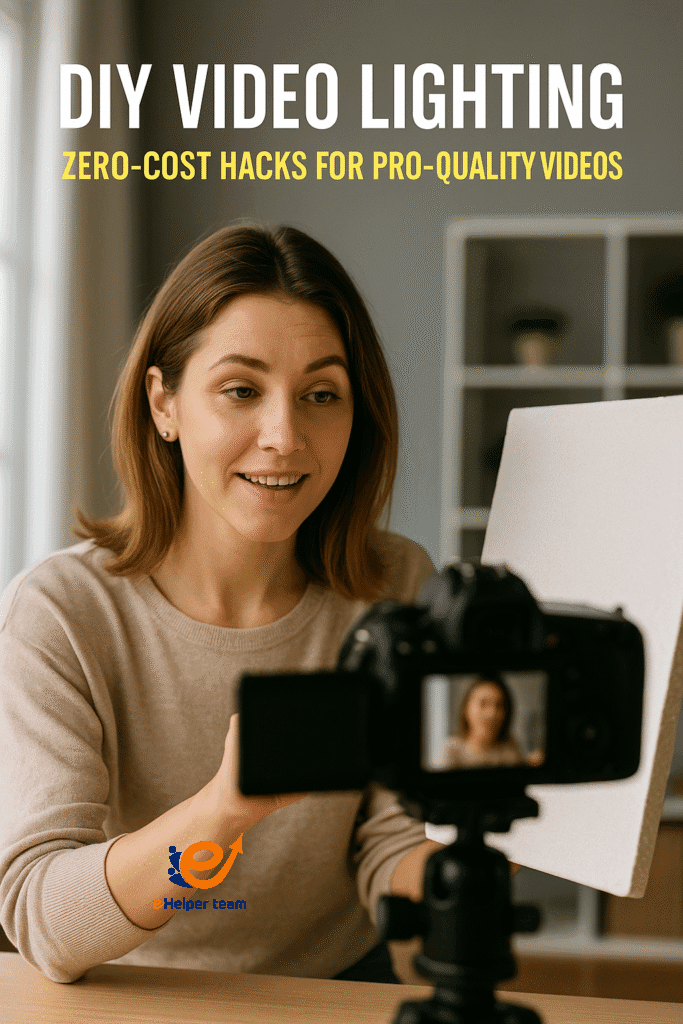
A foam board acts as a reflector, redirecting light to fill shadows. You can find these boards at dollar stores or repurpose packaging materials.
How to use:
Place the board opposite your main light source.
Adjust the angle until shadows are minimized.
For a warmer tone, cover the board with gold foil gift wrap.
This method is cost-effective, easy to set up, and improves lighting consistency across your videos.
Affordable Ring Lights as a Bonus Upgrade
While our focus is on zero-cost hacks, if you decide to invest, ring lights offer great value for money. They provide soft, even illumination and work well for close-up shots, makeup tutorials, or product reviews.
Here’s a free stock footage resource that can complement your lighting setup by adding professional-looking visuals to your projects.
Comparison Table: Zero-Cost Lighting Hacks
| Hack | Main Benefit | Tools Needed | Skill Level |
|---|---|---|---|
| Natural Window Light | Soft, natural tones | Window, sheer curtain | Easy |
| Three-Point Setup | Professional balance | Desk lamps, diffusers | Medium |
| Foam Board Bounce | Soft shadow control | Foam board, tape | Easy |
A content creator filming in a dim bedroom repositioned her desk near a large window, added a white bedsheet as a diffuser, and used a foam board from an old package to bounce light. Her audience noticed the improvement instantly, with comments praising the “clearer” and “more vibrant” video quality.
Next Steps for Building Your Visual Brand
Mastering lighting is just the beginning. Incorporating strategic planning and audience engagement tactics can take your content further. Learn more about building a sustainable content strategy with this social media marketing guide.
Lighting angles can dramatically change the emotional tone of your video. A small shift in the position of your light source can transform a plain shot into something visually striking.
Examples:
Strong side lighting: Adds depth and contrast, ideal for storytelling or dramatic scenes.
Low backlight: Creates a subtle rim light around hair or shoulders, helping to separate the subject from the background.
Direct front lighting: Produces a soft, shadow-free appearance, perfect for live streams or interviews.
Color Temperature and White Balance Essentials
Choosing the right color temperature ensures your colors appear natural and appealing.
Morning daylight tends to be cooler (slightly blue), while evening light is warmer (golden).
Traditional bulbs often give off a warm yellow tone, while LEDs may be cooler or adjustable.
Tip: Keep all your light sources at the same color temperature to avoid mismatched tones and distracting shadows.
Creative Use of Shadows
Shadows are not always the enemy of good lighting—sometimes they add intrigue and style.
Place objects in front of your light source (like plants or window frames) to create artistic patterns.
Adjust the distance between the light and subject to control whether shadows are soft or sharp.
DIY Diffuser Ideas Beyond Curtains
If you don’t have sheer curtains, you can make diffusers from common household materials:
Parchment paper stretched over a small wooden frame.
A semi-transparent plastic cutting board from the kitchen.
Matte white fabric stretched tightly over a frame.
These DIY diffusers soften light and reduce harsh shadows without expensive gear.
Lighting for Different Types of Videos
| Video Type | Recommended Lighting Style | Why It Works |
|---|---|---|
| Interviews | Three-point setup | Highlights facial features and adds depth |
| Cooking videos | Soft overhead + side lighting | Shows details and color of food |
| Live streams | Even front lighting | Minimizes shadows and keeps eye contact |
| Vlogs | Natural, mobile lighting | Adapts to movement and location changes |
The surfaces in your filming space affect how light behaves. Glossy surfaces may create distracting glare, while matte surfaces diffuse light more evenly.
Use white matte boards or paper to bounce soft light toward your subject.
Avoid metallic or glass backgrounds unless you want intentional reflections.
Budget-Friendly Lighting Accessories
Even if you stick to free lighting hacks, a small investment can make a big difference:
Clamp lights for flexible positioning.
RGB LED bulbs for customizable color moods.
Small tripods or stands to hold lights or reflectors at the right angle.
Lighting for Small Spaces with DIY Video Lighting
Not everyone has a large home studio. If you film in a small space, smart diy video lighting choices can make it look bigger and more professional.
Try using natural window light at an angle to maximize brightness without adding extra lamps.
Foldable reflectors or foam boards save space and still help bounce light evenly.
Keep the background light in tone to create the illusion of a larger area.
Layering Lights for Depth in DIY Video Lighting
One light source is rarely enough. With three-point lighting setup explained in mind, you can layer different lights to add depth.
Use a softer fill light to gently lift shadows without overpowering your key light.
Add a subtle backlight or an affordable ring light to separate you from the background.
Place small accent lights to highlight objects or textures.
Integrating Practical Lights into Your DIY Setup
Practical lights—lamps, candles, or visible LEDs—add both style and function.
A desk lamp combined with bouncing light with foam board can give a cozy, evenly lit frame.
String lights in the background add warmth without overpowering your diy video lighting setup.
Visible LED strips can create a modern, high-energy look.
Managing Light Spill and Controlling Direction
When three-point lighting setup explained is done in tight spaces, light spill can wash out your scene.
Use black foam boards to control where light falls.
Angle your affordable ring light so it only illuminates your face and not the entire background.
For drama, allow selective spill to create artistic shadows.
Creating Mood with Colored Lighting Gels in DIY Video Lighting
Colored lighting gels—or DIY alternatives like transparent gift wrap—can change the mood entirely.
Combine gels with using natural window light for a warm afternoon feel.
Try blue gels for a cool nighttime scene, or amber for energy.
Mix subtle color with your bouncing light with foam board technique to create depth and style.
Testing and Fine-Tuning Your DIY Video Lighting Setup
Before you hit record, test your scene.
Record short clips using three-point lighting setup explained and using natural window light to see which looks better.
Adjust angles so your affordable ring light and foam board bounce give the softest shadows.
Check the video on different devices to ensure consistent brightness and tone.
FAQs
Q1: Can I mix natural and artificial lighting?
Yes, but match their color temperatures to avoid mismatched tones. Use daylight-balanced bulbs for consistency.
Q2: How do I avoid harsh shadows without professional gear?
Use reflectors, foam boards, or light-colored walls to bounce light into shadowed areas.
Q3: Is investing in a ring light worth it?
If you film regularly, a ring light offers consistent, flattering lighting at an affordable price.
Q4: Can lighting affect my video ranking on platforms like YouTube?
Indirectly, yes. Better quality increases watch time and engagement, which algorithms favor.
Q5: What’s the cheapest way to diffuse light?
Sheer curtains, parchment paper, or thin white fabric work well and are usually found at home.
Conclusion
Mastering diy video lighting doesn’t require a big budget or a professional studio. With a bit of creativity and resourcefulness, techniques like using natural window light, applying the three-point lighting setup explained with everyday items, and bouncing light with foam board can dramatically improve your video quality. Even small investments like affordable ring lights can take your production value to the next level.